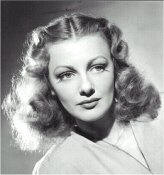
For fans of The Pacific and Jon Seda, who played John Basilone in the series, my blogger pal Linda Moss (aka "The Homeshoppingista") has written a piece on Seda, a Jersey Guy originally from Clifton.
Well written (as always- she's a pro; guys like me just THINK we're pros)....and she's a Jersey Girl. And if you don't visit her blog my cousin Paulie will come to visit you!
I just wanted to take a minute to wish all a Happy Memorial Day Weekend, and a safe one as well.
And while your at it, take a minute to remember the veterans of of our military forces past and present, and those men and women currently serving. Find a second or two to think of those who didn't make it back to "The World".
It's about more than just the unofficial beginning of summer.
Pictured above, the real John Basilone, Eugene Sledge, and Robert Leckie, the men who's lives were central to The Pacific. I have a chapter or two to go on Leckie's memoir Helmet For My Pillow- the man was an incredible writer, with a facility of language that was a gift from God. I hope to finish it over the weekend, and I'll give you a review as soon as I do.
And then I'll start Sledge's With The Old Breed....both were a birthday gift (of sorts) from my niece.
Enjoy the weekend....I'll talk to you in a day or so.
The stars of The Pacific; Jon Seda, Joe Mazzello, James Badge Dale
Episode 10 of The Pacific opens with Bob Leckie (James Badge Dale) in a Long Island hospital recovering from wounds incurred at Peleliu. A blond volunteer is reading to Leckie and another patient, ironically from Homer's The Odyssey, about the aftermath and long journey home of Odysseus from the Trojan War when the announcement is made of Japan's surrender....it was the long awaited VJ Day.
And from there we see where the journey went for the main characters of the series, plus several of the secondary players in the drama. The three central characters, Bob Leckie, Eugene Sledge (Joe Mazzello), and John Basilone (Jon Seda) had very different fates. Basilone was killed in action at Iwo Jima after seven months of marriage to Lena Riggi (Annie Parisse). Leckie was physically wounded and returned home even more cynical than he did when he left. But it was Eugene Sledge who experienced the most change in his wartime experience. Sledge left Mobile as a callow youth and returned a man who had seen and done horrible things in the act of surviving the war, and bore terrible internalized emotional scars not visible to others.
This episode had so many unforgettable scenes, such as the distance and coolness of Leckie's parents when he returned home in New Jersey. We understand Bob Leckie a little bit more after seeing his reunion with his Mom and Dad, who seem to be a couple of people who are not able to express love. Mr. and Mrs. Leckie used Bob's room as storage space, and greet Bob as if his homecoming was a kind of inconvenience. And it appears from the story that they probably didn't visit him while he was hospitalized- whether they knew he was on Long Island and chose not to visit him, or if Bob decided against informing them is unclear.
Bob's mother does appear to want Bob to have some happiness in his life. When he catches him spying on Vera Keller (Caroline Dhavernas) she suggests that Bob wear his Marine dress blues. Vera was dating a recent West Point grad, when Bob- in his dress blues- supplants the young officer in the life of Leckie's longtime neighbor. It seems that though the Leckies and the Kellers lived across the street from each other for twenty years that they were not in the least friendly. We see a certain amount of disfunction in Leckie's home life, and perhaps its the reason for his turning to writing; it became his expressive outlet. When we last see Bob Leckie in the series he and Vera are at a family dinner in the Leckie household. Family members are complaining about the inconvenience of the post war rail strike, and the then outrageous cost of one of those newfangled television sets. One male family member quips that they understand Bob's sacrifice during the war, but they clearly don't.....and they can't begin to comprehend the depth of that sacrifice. It is clear in the final scene with Leckie that he and Vera are in love, are a couple, and will spend their lives devoted to each other. Bob Leckie's Odyssey was over. He reclaimed his life and career, and found the love of his life in the process.
And further south in New Jersey, Lena Riggi Basilone visited the home of John's parents in Raritan. Three of the Basilone sons served in the war; John never came back. Lena received the news of John's death on Iwo Jima on her 32nd birthday. At first there seemed to be a certain distance between the two Mrs. Basilones. Mother Basilone had met her widowed daughter-in-law for the first time in the dorway of the Basilone home. Upon entering it becomes clear that this tight knit Italian-American family is still mourning the loss of their heroic son. The scene in which Lena hands John's Medal of Honor back to John's parents, and the tears that followed was one of the more poignant and heartbreaking minutes of television in many years.
The last third of the series concentrated on the experiences of Eugene Sledge; he became the central character as the series wound down, and Sledge was the one who took us through possibly the most horrific chapters of the Pacific war, if not all of World War II. Eugene became "Sledghammer" before our eyes; he went through the most profound changes, starting as a shy teenager in Episode One and returning home in the last chapter as a man who has learned to kill dispassionately because his life, and the life of his buddies, depended on it. And ultimately Eugene returns to Mobile damaged on the inside. Bob Leckie had a budding career in writing when he joined the Marines; his transition to civilian life went relatively smoothly compared to Eugene Sledge. Eugene had no career before the war, and no plans after it, except that he had seen enough of death and killing, and couldn't even bear to put on a uniform again after returning home. His friends Burgin (Martin McCann) and Snafu (Rami Malek) have some things lined up back in their homes in Texas and Louisiana, respectively (with an Australian bride on the way for Burgin). But Sledge is haunted by survivor's guilt; in a war where so many others in his unit had died or been wounded, and he came home without a scratch. And for this he cannot psychologically find a justification. While his brother Edward moved on after returning from Europe and got a job in a bank, Eugene seemed to mope and drift; what he needed was a release. That moment finally came when he went hunting with his father; Eugene Sledge couldn't bear to fire a gun to kill another living creature. He broke down and wept, as his compassionate father cradled his son.
We see Eugene in the series' final scene examining the delicate structure of a flower, sitting in the wonder of nature, perhaps finding that "eureka moment" when his calling finds him; he was to be a teacher of sciences, a distinguished professor and PHD, and he would become a gentle scholar that in later years no one would imagine was a combat veteran in the bloody Pacific theater.
Some Closing Thoughts
I'm glad that the creative team behind The Pacific gave the audience a chance to see what happened later in the lives of the characters. As of this writing only three of the main characters portrayed in the series are still alive; Sid Phillips, Chuck Tatum, and RV Burgin. Burgin and his bride Florence are still together after more than 60 years, and he maintains a website and does make personal appearances. He has also co-authored a memoir of his wartime experiences, Islands of the Damned.
Today I decided to cash in a Barnes and Noble gift card my niece gave me for my birthday. With the card I got Robert Leckie's Helmet For My Pillow and Eugene Sledge's With The Old Breed, two of the books in which The Pacific was based.
And one of the first things I looked for- prompted by many of the queries to this site- was for information about the mysterious "Stella". Bob Leckie's romantic interest in Melbourne.
Well folks, here's the news. There was no Stella.
The episode involving "Stella" was fictionalized but had basis in fact. Bob Leckie had a relationship with two women in Melbourne. On pages 146-152 of Helmet For My Pillow Leckie talks about a woman he called "Molly", and another "Sheila". It was his budding relationship with "Sheila" that caused his breakup with "Molly". Also, "Sheila" was a married woman, a fact that Leckie did not know until late in their romance.
So why change the facts in this part of the story when so many great pains had been taken for historic accuracy in the series?
Probably for a few reasons. But here's what I think. Bob Leckie was of that generation of our parents and grandparents in which you did not kiss and tell. In his book Leckie never assigned last names to the two women, and probably made up their first names as well. Possibly Bob took their true identities to his grave.
And maybe that's how it should have been.
So if Bob Leckie disguised the true facts and identities of his romances in Melbourne, it probably gave a green light to present that episode with a certain degree of artistic license. Perhaps "Stella's" Greek background came from a different source from another romance in Australia involving different players. But in the long run, it doesn't matter....the episode accomplished what it set out to do; that is, present the fragility of wartime romances in all of their heartbreaking detail.
Mission accomplished.
As for the two books, I've read the first chapter in each, and it brought back memories of my own basic training. "DI's" and "TI'S" must get a thesaurus of commonly used cliches to use on new recruits, because it doesn't matter what branch of the service you were in, or what year it was, you're guaranteed to hear the same in yer face profane language.
"Yer heart belongs to Jesus but yer ass belongs to me!"
As for the writing of the two memoirs, oddly enough I find Sledge's book to be more readable (so far), though Bob Leckie was the professional writer. Sledge's writing style was that of a teacher, trying to get you to learn something you didn't know. Bob Leckie, on the other hand, wrote his book like a storyteller; sometimes it takes awhile to adjust to his style.
I'm glad I bought both books, and I do intend to read each one. With Memorial Day around the corner, maybe I'll spend sometime during the day remembering those who fought and fell, and those who returned from the campaigns in the Pacific.
Update! Wednesday May 18
I'd never thought of checking out Alan Sepinwall's TV Blog about the accuracy (or lack) of Episode Three involving "Stella". In his blog you'll find more confirmation that the Leckie-Stella romance was fiction.
Sorry romantics out there! It was a great storyline just the same.
But here's an angle I thought of as well. Stella was of Greek extraction, and the hospital volunteer was reading Homer's The Odyssey to Leckie in Episode 10. Probably a metaphor for his wartime battles and serpentine route to returning home.
Whaddya think?
Update! Sunday, May 23
More than a few readers have logged unto this blog inquiring "who played Bob Leckie's mother?" on The Pacific. Well, she's a familiar name, face and voice for fans of 1970's TV, of Stephen King movie adaptations, and a legend of the Broadway stage. Marion Leckie was played by Betty Buckley. Ms. Buckley played Abby Bradford, stepmother to the Bradford clan in the 1970's TV series Eight Is Enough. She first came on the scene in 1976 as the sympathetic teacher Miss Collins in the original screen version of Carrie, and has made numerous movie and TV appearances in the years since.
But Buckley's biggest success has come on the Broadway stage, including roles in 1776, Pippin, and Sunset Boulevard. Her greatest role, and the one she will always be remembered for, was Grizabella in Cats.
To preface this commentary on the latest episode of HBO's The Pacific I'll recall a line from James Bradley's Flags of Our Fathers.....
"The Japanese were not on Iwo Jima. They were in Iwo Jima"
For me, Episode 8 of The Pacific was the saddest. I knew what was going to happen; anybody who had grown up in post World War II New Jersey could tell you the story of John Basilone, the hero of Guadalcanal who re-upped after winning the Congressional Medal of Honor and was a national celebrity, only to die on the first day of the assault on Iwo Jima in February, 1945. Basilone died the warrior's death, and became a legend. And Episode 8 of "The Pacific" fills in some more of the gaps of Basilone's life between Guadalcanal and Iwo Jima, including his romance and marriage to Marine Sgt Lena Riggi.
The episode begins on Pavuvu with Sledge (Joe Mazzello) and Snafu recovering from the hellish fighting on Peleliu, with Sledge increasingly agitated and embittered, a man who has aged beyond his years.
John Basilone (Jon Seda) was in New Jersey, visiting his family, becoming evermore annoyed at the celebrity thrust upon him. After trying again to return to the Corps he is finally granted his wish, and is reassigned to Camp Pendleton in California to train new troops, most of whom are learning the intricacies of machine gun warfare.
Basilone meets Sgt Lena Riggi (Annie Parisse, left) who he is attracted to. Lena rebuffs Basilone at first- she is unfazed by his celebrity, but John is persistent and continues to ask Lena out.
Eventually she warms to him...and he proposes to her, and Lena accepts.
Lena and John marry, and not long afterward John decides to re-enlist. He is sent to Iwo Jima. On February 19, 1945 the United States Marines landed on Iwo Jima, a 7.5 mile pile of volcanic rock and ash, the last major step before the Japanese home islands. The Japanese had built an intricate network of fortresses and tunnels on the island, and were ordered to fight until the last man; there would be no surrender from the Japanese defenders.
Basilone and his men hit the beach of Iwo Jima...he yells, screams, and curses his men to get off the beach and to advance before they are killed by Japanese fire. Basilone heroically leads the assault, but is cut down by enemy gunfire, and dies.
The final shot of the episode shows Lena Riggi Basilone in her uniform, staring out over the waves of the Pacific, knowing that out there was the place where the man she loved was taken from her. There is silence, and then the closing credits.
This episode was different from the ones preceding it in that it had to flashback more than a year to tell the story of the Riggi-Basilone romance and marriage. Once those gaps were filled the story of the Pacific war went back into sequence, with Iwo Jima following Peleliu.
For those interested about the battle of Iwo Jima, please check out the two films Clint Eastwood directed several years ago, Flags of Our Fathers and Letters From Iwo Jima. They are companion pieces, and tell the story of the battle from the perspective of both the Americans and the Japanese. If you are a fan of THE PACIFIC, these two movies are MUST sees.
Welcome to my review and comments about the latest episode of HBO"s THE PACIFIC. To those who may be reading this blog for the first time, my practice is to watch the episode on Sunday on its first airing, and watch it a second time a day or so later before commenting.
The United States Marine action at Peleliu in September and October, 1944 is one of the forgotten battles of World War II. It was originally conceived to protect General Douglas MacArthur's flank while the US Army continued its retaking of the Philippines from the Japanese invaders. The airstrip on Peleliu was supposedly of value in MacArthur's campaign. As it turned out, it was never a factor in those actions; the Marines fought, suffered, and died on Peleliu in a two month long battle for a spec of land in the Pacific that in the end had little strategic value.
Eugene Sledge (Joe Mazello) and most of the other Marines fighting on Peleiu reach their breaking point. The days were either excruciatingly hot or are a torrent of rain. One of the more memorable scenes of Episode Seven was when Captain Haldrane talked to Sledge and the other men during a heavy rain, when he tells Sledge that he can't "dwell on it"- the loss of life and the horror he sees everyday. And then "The Skipper" tells his men to get some sleep, while the rain pounds and soaks them.
Japanese soldiers are driven out of their fortifications by burning them alive with flame throwers. Marines are shot and blown to bits. The Japanese attack the Marines at all hours of the day, and especially at night when they generate near panic and terror. The battle goes on for weeks and months- the Marines are malnourished, exhausted, and near collapse. Some do snap mentally, and not only the young troops; the grizzled World War I veteran Gunny Haney is among those who succumbs to the sight of death and destruction he saw daily.
This episode dealt heavily with the moral ambiguity men in combat feel. After awhile the combatant starts to feel a certain loss of humanity, sometimes wishing for his own death to be quick and relatively painless, while dealing with death he has caused as a fighting man. Sledge starts to go over to a point of darkness; after the death of Captain Haldrane from a sniper's bullet, Eugene was sitting with Snafu, when Sledge decides to take the gold out of a dead Japanese soldier's teeth. Snafu, who has done the same on occasions, stops Sledge, telling him that the dead man has too many germs. In reality Snafu is telling his friend in a subtle way that he, Snafu, has crossed over to a darker place; he doesn't want Sledge to do the same.
In a moment of dark comic relief of sorts a Marine goes into a cave to relieve himself when he is attacked by a sword wielding Japanese; he chases the Marine, pants down, to the area where the rest of the Marines are. The Japanese soldier is shot and killed, but not until the poor young Marine makes a "deposit" in his own pants, to the amusement of the troops watching and laughing.
At the end of the episode the island is captured, and Sledge and the others are evacuated to Pavuvu. At Pavuvu the Marines are given orange juice by female Red Cross workers. Sledge and Snafu stop and get some juice, and the exhausted men pause to look at the beautiful young women pouring the refreshments. They are told to move on by a fresh looking first Marine officer in a clean pressed; the worn out Sledge turns and gives a cold stare to the officer who got the message- leave him alone, he and the others have lived through hell.
Joe Mazello did a subtle and convincing job in his portrayal of Eugene Sledge; the character seemed to age 10 years in the span of two. We first saw Sledge as a teenaged boy at home in Alabama. When we left him, as he was swimming naked in the ocean at the end of the episode, he was now a world weary veteran, forced to grow up hard and fast. He personified the story of tens of thousands who went off to war not far removed from childhood, and who returned as men.
On a small sidebar plot, we saw John Basilone (Jon Seda) on a bond tour in front of an organization that appeared to be Shriners, with actress Virginia Grey in tow. We later see Basilone at a driving range, flanked by dozens of reporters. Basilone started hitting bucket after bucket of golf balls, into the night, to a point where his hands started to blister and bleed. All the time Basilone is shown to have mental flashbacks to Guadalcanal, and to the the death of his buddy Manny Rodriguez.
Basilone's story will continue in Episode Eight, as the United States starts to zero in on the Japanese home islands.
But first they must take the last stepping stone, a small island within range of the Japanese homeland.
Peleliu is sometimes called "the forgotten battle" of World War II's Pacific theater. Guadalcanal, Iwo Jima, and Okinawa are part of our collective American historical psyche. But it was at the two months long battle from September to November, 1944 that the Japanese strategy had shifted from trying to overwhelm the Americans and the allies with "human wave" attacks to allowing them to land and then trying to inflict as many casualties as possible, even if it took the life of the last Imperial Japanese soldier.
With Part Six of The Pacific the character emphasis starts to shift away from Bob Leckie (James Badge Dale) and towards Eugene Sledge (Joe Mazello). The episode began in Mobile, Alabama. Its late at night in the aristocratic Sledge household, when a car pulled up- the butler told Mrs. Sledge that its a man in uniform. The dignified Southern lady's face instantly turned to one awaiting sorrow; she's sure that the man in uniform was coming there to tell her that her son had been killed in action.
All are relieved when the young Marine turned out to be Sid Phillips, who came for a visit. Sid told them that Eugene is in good hands with the First Marine Division- all are good men, and he thought Eugene would be in good company.
Eugene and his comrades were on Peleliu. After being fired on by artillery from the hillside, the Marines had to cross the airfield to get to higher ground. On the airfield hundreds of Japanese were waiting to cut them down. Water was scarce, and the temperatures exceeded 100 degrees. In a scene that resembled a kind of Holy Communion, Sledge, Snafu, Oswalt, and the other Marines shared what little water they have left by drinking from the same canteen before their run across the airfield....some of them would not get out of the situation alive.
The run across the airfield resulted in heavy casualties; among those killed was Oswalt. Leckie's pal Runner was seriously wounded. In order to save his buddy Leckie ran back across the airfield to find a corpsman and a radio. Leckie was knocked unconscious by a bomb blast. Hours later he awakens on a hospital ship (at the end of the episode he was reunited with Runner).
While spending the night in a secure area, Sledge admitted to Captain Haldane about how scared he was crossing the airfield. Haldane told the Sledge that the only Marines who weren't scared were either crazy or dead. Sledge had gained the trust of the combat veterans, including the battle hardened Snafu, who started calling Eugene "Sledgehammer". While approaching an entrenched Japanese mini-fortress, the Marines spend the night, trying to keep it quiet to avoid a Japanese bayonet attack while most of them are sleeping. One Marine started screaming and thrashing about, and wouldn't be quiet....in order to save the others a Marine hit the guy on the head with a shovel, a blow that kills him. Sledge rationalizes the next day that it had to be done...if the man wasn't silenced, all of them could have been killed.
Sledge and his comrades watched Captain Haldane ride off to attempt to get a change of orders; they didn't have sufficient numbers to overtake the Japanese stronghold, and an attack would have led to needless and unacceptable casualties.
On board the hospital ship we see Leckie and Runner, reunited and wounded, both sailing out of the South Pacific, and probably out of the war.
Notes
Once again for those who may be reading my comments for the first time, I always watch an episode of THE PACIFIC twice. On the second viewing I start to make notes on anything that stood out, and look for little things that I should have picked up on in the first look, but didn't.
John Basilone (Jon Seda) was no where to be found in Episode Six. But he will be back, probably in Episode Seven and almost certainly in Episode Eight.
And in closing....my Mom always told me that she had a cousin who died in the Pacific theater during World War II. I always thought he died at Iwo Jima, but that was wrong.
Mom told me he was with the Marines at Peilelu, and was killed by a sniper. So I had a cousin who died in combat in that little piece of hell, one who was killed years before I was born. I know he is buried somewhere in South Jersey.
I think I owe it to him to find out where.....and to pay him a visit this Memorial Day.
First, I'd like to apologize to the many readers who have been following my comments on HBO's The Pacific for the delay on this post- I'm just knee deep in spring cleanup, and a bit swamped right now. By far, The Pacific and its characters have been the most popular topic on this blog with the readership for weeks, and I thank you all for dropping by read my remarks and feelings about each chapter of this amazing series.
Chapter Five could be divided into three parts. The first was about John Basilone (Jon Seda), now involved in a war bond drive with Hollywood star Virginia Grey (Anna Torv).....and involved in a tryst in a hotel room as well. Was that an actual incident? I haven't found any evidence....but then again I didn't look very hard. But I'll tell you this- the producers of The Pacific went so far as to contact Robert Leckie's widow to get a picture of her wedding dress. When she gave them a black and white photo they asked her what color the dress was, demonstrating their commitment to accuracy. So if they say that Basilone and Virginia Grey (pictured left) were an item ever so briefly, that's good enough for me.
Basilone is a reluctant celebrity, but seems to be handling it well. His brother George comes to visit in the hotel lobby, and John tells George (now a Marine) in no uncertain terms- don't try to be a hero. Older brother John told George that he doesn't have to prove anything.
The second part of the story moves on to the rat and land crab infested island of Pavuvu where Eugene Sledge (Joe Mazello) joins the Fifth Regiment along with Oswalt and Leyden. The combat veterans they meet give the new guys a cold shoulder, and they end up bunking in another tent. Sledge meets up with old boyhood buddy Sid Phillips, who is about to rotate back to the United States. Also on the island is Bob Leckie(James Badge Dale), who in a theological discussion with Sledge tells of his doubts of the existence of God. Sledge asks Leckie what he believes in, Leckie answers "Ammunition".
Finally, the Marines are transported to Peleliu, and on September 15, 1944 they hit the beaches of the coral atoll which is heavily defended by Japanese. The Marines sustain heavy losses, and Sledge, in his first combat, experiences the horror of war for the first time. Among the casualties is Leckie's buddy Hoosier, who is badly wounded in the thigh. Peleliu has an airfield that must be taken from the enemy, and there are many more Japanese on the island than anticipated. Operations felt that the island could be taken in a couple of days; it took two months. Temperatures in the daytime regularly hit 110 degrees, and there was little potable water for drinking.
One of the more horrific scenes of the episode was when Snafu and Sledge begin to have some chow, and Snafu puts his can down and goes to a dead Japanese soldier a dozen yards away. Snafu then starts taking out the dead Japanese soldiers gold teeth with his knife.
The episode ends with the Marines contemplating the next day's action on Peleliu.
A couple of random notes.
When I first read that the Battle of Peleliu was going to be spread out over three episodes I thought..."You've got to be kidding".
But after seeing the episode twice, and reading up on the background of the action, it was entirely appropriate, and even necessary. Battles in the Pacific theater were unalike those in Europe and North Africa in that very often there was no retreat and no surrender, so the battles lasted weeks and months instead of days. By stretching Peleliu out over a two week three episode span the viewer gets a better sense of what these guys were up against.
And even though it was the second time I saw Episode Five, my heart was racing and thumping in the brilliant scene of the landing craft approaching the beach at Peleliu...I've seen many war movies over the years, but the recreation of the amphibious landing was brilliantly staged, and so realistic it was scary. Thank God it was not in 3D.
The chilly reception Sledge and his buddies got from the veterans was typical of what many experience in the service. I was on the receiving end during my tour, and I dished it out when I was one of the "old guys". Looking back on it now, it seems silly and cruel.....so if Airman Jones or Airman Babcock have dropped in and are reading this, I apologize for being such a boorish pain in the ass way back when.
James Badge Dale (center in teeshirt) as Robert Leckie
Spoiler Alert...if you haven't seen Episode Three of THE PACIFIC, advance at your own risk!
Part Three of HBO's The Pacific shows an abrupt departure from the storytelling style of its companion piece Band of Brothers. In BOB the audience received little information about the personal lives of the men in Easy Company. We knew where some of them came from through conversations with other characters; we knew some were married, others not, and we got a smattering of personal history. BOB was about the story of one unit, Easy Company, and how their wartime experience in Europe spanned most of the significant events from Normandy to the occupation of a conquered Germany. Most episodes of BOB dealt with an action in which Easy Company participated, as we saw some characters we got to know a little cut down and replaced by new ones, and old stalwarts marching on to VE Day.
The Pacific's story is told mainly through the eyes and experiences of John Basilone (Jon Seda), Robert Leckie (James Badge Dale), and Eugene Sledge (Joe Mazello), as well as several secondary characters. Consequently we learn more about these characters in three episodes of The Pacific then we do in ten hours of BOB. And since it deals with individuals rather than a particular military unit, the action does and will move from location to location more readily than BOB, and some characters may not appear at all in certain episodes- Eugene Sledge is no where to be found in the third episode The Pacific- Saviors of Guadalcanal.
After being evacuated from Guadalcanal in January, 1943, the Marines are shipped to Melbourne in the Southern part of Australia for some R&R. Its summer in Melbourne, and when the transport docks they are greeted by throngs of thousands of Australians waving flags, carrying signs and banners greeting them, cheering them to the music of John Phillip Souza....Australians regard the American Marines as saviors of their country, and are treated as heroes by the populace.
Many of Australia's fighting men are serving in North Africa, and there is a shortage of young men in the country, and many beautiful, young, single women. The Marines are billeted at a cricket ground, but MP's look the other way when many of Marines go AWOL....it was time for a break, featuring booze and babes, after their ordeal in the Solomon Islands.
Leckie is partying with his buddies when he meets Stella (Claire Van Der Boom, pictured left), a beautiful Australian of Greek ancestry. He gets her address, and comes by her house the next day. Stella is the only child of loving and warm parents from the old country, who take an immediate liking to the young American. Over the next few weeks Leckie and Stella fall in love, and he becomes regarded almost as a new member of the family by Stella's mother and father. One day while siting in the back garden eating roast lamb provided by Leckie, Stella's father reads that Stella's friend from childhood, Alexi, was killed in combat. That triggers something in Stella- she realizes that the odds of Bob Leckie making it through the war unscathed may be long. She decides to break up with Bob Leckie- losing him in battle would be too much for her to take, and it would be even more devastating to her parents- particularly her mother- who had grown to love Leckie as their own.
Bob Leckie goes on a drunken bender after the breakup with Stella. He had lived through hellish months on Guadalcanal before attaining several weeks of heaven with a beautiful woman and her wonderful family, only to see it slip away through no fault of his own. He gets into a profane and violent confrontation with Lt. Corrigan. He ends up in the brig overnight- the next day he finds that he is being shipped out.
Meanwhile Sid Phillips (Ashton Holmes) has struck up a romance with a lovely young woman named Gwen, who is constantly under the watchful eye of her protective grandfather. Sid finally "touches the merchandise" shortly before he receives his orders to ship out. You get the feeling it was the first time for both.
During his stay in Melbourne Basilone and JP Morgan get into a a small brawl with an Australian soldier who mocked their toast to dead buddy Manny Rodriguez in a pub. Basilone and Morgan continue to drink it up and party hard. The next day a hung over Basilone is told by Lt Col Chesty Puller that he has to pull it together and be a better example to his men; Basilone was being awarded the Congressional Medal of Honor.
Several days later, after the medal ceremony, Puller tells Basilone that his next assignment was to rotate back to the United States- he was needed to sell war bonds, to put a human face on the war effort. Basilone says goodbye to old friend Morgan; in the final scene of the episode Basilone is looking out the window of a plane flying over the Golden Gate Bridge.
Watching the ending of this episode I thought about Basilone, being a sort of hero surprised by his celebrity much like the flag raisers of Iwo Jima, and how both were used to sell war bonds on tours conducted nationwide. And I remember hearing stories of the old timers who lived in those days, the ones who manned the home front. You bought war bonds, because you were expected to do so. You had gasoline, meat, and butter rationed, as with many other things. There was a sense of unity in the country, and of common purpose.
Maybe that was an America of which we may never see the likes of again.
Update- For Those Who Want To Know...."Did Bob Leckie Get Back With Stella And Marry Her?"
I was just looking at some of the queries to this blog....and the most popular one was "Leckie-Stella". A lot of people, myself included, wanted to know if Bob and Stella had a reunion and a happy ending.
Well....I'm not going to tell you. That would be one spoiler too many. But If you want to know more about Bob and his family after the war, check this article at NorthJersey.com, and this video at HBO.com for the answer....did Bob Leckie marry Stella?
Update May 19, 2010
For those who are still curious about the identity of "Stella" and what happened to her, I included the answer to your question in the bottom of the blog entry for Episode 10; Home & Beyond. You might be surprised.
After a delay of several days, its time for my overdue take on this Sunday's episode of HBO's The Pacific. I did get a bit sidetracked by all the other news going on, and I wanted to get a chance to see the the second episode one more time. Though it deals with a period of only a few days of the Battle of Guadalcanal, I wanted to see it again to get a better feel for just what the Marines of the First Division were up against at Guadalcanal. A second viewing helps to grasp the enormity of the task at hand, what they did, and of the heroism of the First.
By October, 1942 the US Marines at Guadalcanal were cut off- the Navy had to move out after being repelled by a Japanese attack. They were alone, short of food and ammunition, suffering from the brutal tropical heat and humidity, insects, malaria and digestive tract infections- and were being harassed by Japanese attacks around the clock. After Robert Leckie (James Badge Dale) and his fellow Marines survive a Japanese assault, John Basilone (Jon Seda) and his men are sent by LT.Col.Chesty Puller to defend the perimeter around Henderson Field to keep it from falling back into Japanese hands. They are also ordered, if they are defeated, to go into the jungle and continue to fight as guerrillas, if need be.
On the night of October 24-25, 1942. Basilone and his men of C Company were vastly outnumbered, yet held their positions and repelled the Japanese attack. Basilone manned machine guns in the attacks, then repaired jammed guns, and went back through the jungle to get more ammo. He killed several Japanese in hand to hand combat and with his side arm, and returned to his men. One of his hands was badly burned when he touched the hot barrel of the Machine gun, but he fought on.
Below, his his citation, from the Arlington National Cemetery Website.
For extraordinary heroism and conspicuous gallantry in action against enemy Japanese forces, above and beyond the call of duty, while serving with the 1st Battalion, 7th Marines, 1st Marine Division in the Lunga Area. Guadalcanal, Solomon Islands, on 24 and 25 October 1942. While the enemy was hammering at the Marines' defensive positions, Sgt. Basilone, in charge of 2 sections of heavy machineguns, fought valiantly to check the savage and determined assault. In a fierce frontal attack with the Japanese blasting his guns with grenades and mortar fire, one of Sgt. Basilone's sections, with its guncrews, was put out of action, leaving only 2 men able to carry on. Moving an extra gun into position, he placed it in action, then, under continual fire, repaired another and personally manned it, gallantly holding his line until replacements arrived. A little later, with ammunition critically low and the supply lines cut off, Sgt. Basilone, at great risk of his life and in the face of continued enemy attack, battled his way through hostile lines with urgently needed shells for his gunners, thereby contributing in large measure to the virtual annihilation of a Japanese regiment. His great personal valor and courageous initiative were in keeping with the highest traditions of the U.S. Naval Service.
One source claims that Basilone killed 38 Japanese in that battle, another says the number was close to 100. While watching this sequence I noticed the battle, which lasted all night, was condensed into roughly eight minutes. Still, the portrayal of Basilone's action was accurate given the constraints of time. The next morning Basilone is told by Puller that he would be putting Basilone in for a medal. Basilone goes looking for his friend Manny Rodriguez, who stayed behind as a runner for Puller. Manny's body is found, laying dead in the jungle by Basilone.
Meanwhile back in Alabama, young Eugene Sledge( Joe Mazello) is told by his physician father that he no longer has a heart murmur. Gene tells his father that he will be enlisting, though his father has concerns about what war will do to his son.
By January 1943 the Japanese evacuate Guadalcanal, and some of the Marines are transported off of the island. The episode ends with Leckie and his friends finding out while drinking coffee in the galley of the transport that the Marines of the First Division at Guadalcanal were considered heroes back in the United States.
This morning while reading the print edition of The Star-Ledger I checked out letters to TV critic Alan Sepinwall, and one talked about the scope of The Pacific, and how it neglected the role the Army played in the theater. And it is a valid criticism- the series won't deal with the war in New Guinea or the Philippines, or in China, Burma, or many of the other fronts. Nor will it talk about the role of the Army Air Corps, and the Naval aviators or naval battles- the scope of the Pacific war was just too enormous and cost prohibitive to reproduce in a limited TV series. Much like Band of Brothers concentrated on one group in a series of battles in the European war, it was not the whole story of victory in Europe. "Brothers" didn't deal with the campaigns in North Africa or Italy, and of course, the first turning point in Europe was the German defeat in the Eastern Front by the Soviets.
And The Pacific does limit its story to the three main characters, Basilone, Leckie, and Sledge, and the war waged by Marines island hopping in tiny specs in the ocean, all the way to the Japanese home islands. What this series does is open the door to people who were too young to feel the direct impact of the war, and gives them a start in a search for the history of the war in the Pacific, in all its vast scope, tragedy, and triumph. For a more comprehensive view of World War II, I suggest Ken Burns' The War, shown on PBS several years ago and available on DVD.
Episode Three is coming up Sunday night, with Basilone getting the Congressional Medal of Honor and national celebrity status.
I wanted to get into a discussion of the first episode of HBO's The Pacific yesterday, but there was the small problem of starting the cleanup after the nor'easter that battered the mid-Atlantic over the weekend. Actually it was better to sit back and view it a second time,and collect my thoughts about the episode, its historical significance, and maybe even a different spin on the episode and the commentary of others.
I posted several comments on Alan Sepinwall's What's Alan Watching? blog about my take on Episode One, and found some of the comments there quite interesting- but I'll get back to that shortly.
The first episode introduced us to the main characters; Marine Gunnery Sergeant John Basilone (Jon Seda), new Marine enlistee Robert Leckie (James Badge Dale), and young Alabaman Eugene Sledge (Joe Mazello). Sledge wants to join the military and be part of the war effort, but his physician father told him after an examination that he still has a heart murmur, that would disqualify him from service. His best friend Sid Phillips (Ashton Holmes) joined the Marines about the same time Leckie did, and Leckie and Phillips end up in the same company headed to the Solomon Islands and Guadalcanal in August, 1942.
Basilone, who did a stint in the Army before re-enlisting as a Marine, and his buddies Manny Rodriguez (Jon Bernthal) and JP Morgan (Joshua Bitton) had been told previously in a briefing by Lt.Col. Chesty Puller that they too were on their way to Guadalcanal.
Leckie, Phillips and their company are part of the early assault on Guadalcanal. When they hit the beach they find no resistance at all, only other Marines who were there first. The Japanese were building an airfield on the island, but it was captured by the first wave of Marines as the Japanese retreated into the jungle. The field became known as Henderson Field, and the Marines had to secure it and Guadalcanal from the Japanese who surely would try to retake the airstrip.
Leckie's company starts a long march in silence across the fields and jungles of the island, but did not engage the enemy. They did come upon bodies of dead and mutilated Marines along the march. While hunkering down for the night in torrential rain one of their own is shot and killed by a fellow Marine when the man was looking for a place to urinate.
The company finds themselves cutoff from the US naval fleet when they are repelled by the enemy and forced back to sea. Soon the company is attacked by swarms of Japanese in a night time attack, with dozens of Japanese soldiers running into entrenched Marine machine gun fire. The fight lasts all night; the next day dozens of dead Japanese soldiers lie on the beach and in the water. The Marines are horrified by the amount of death around them. One Japanese started to motion that he is wounded and needed help; when two medics approach him, he pulls the pin from a grenade, blowing all three of them up.
Then a small group of Japanese soldiers attack the company and all but one are cut down. After the Marines saw two of their own blown up by a wounded Japanese they decide no prisoners- they start using the Japanese soldier for target practice. The soldier throws down his weapon, but seems hysterical and not about to surrender. While the Marines are trying to wound the soldier as often as they could, Leckie takes out his sidearm, and kills the soldier.
Leckie later goes through personal belongs of the man he killed. He finds a small black and white photo of the man with a woman in a book he is carrying...he also finds a tiny homemade doll of a woman in traditional Japanese dress. Leckie threw the photograph into the Marine's campfire.
The next day reinforcements arrive, led by Chesty Puller. Among them are Basilone, Rodriguez, and Morgan. The episode ends with a reading of aloud of a letter from Sledge to his friend Phillips. When it was revealed that it was Phillips birthday, the Marines sang a scatological version of "Happy Birthday" to Phillips as the picture faded to black.
Some commented on other forums about the first episode's lack drama, and there were periods of silence where nothing was seemingly happening. And maybe that was one way the writers wanted to make clear that the Pacific theater was a different kind of war than that fought in Europe and North Africa. The Japanese were there first; they knew the terrain, and the Americans had to slowly get the feel of where they were and what was in front of them. The Japanese used the jungles and the night to their advantage- the war in Europe was usually fought in daylight (with exceptions) while the Pacific war raged 24 hours a day.
You can't talk about the war in the Pacific without talking about the role race played in it. The Japanese believed they were "spirit warriors" superior to others, who served a living god, their emperor. The code of Bushido was used by the Japanese war party in much the same way as the myth of Aryan superiority was incorporated by the Nazis; the chivalry of ancient Japanese knighthood was corrupted into a belief of showing no quarter to your enemy, and asking none for yourself. There could be no surrender for the Japanese spirit warrior, because it was dishonorable. And those the spirit warrior vanquished weren't deserving of mercy; In the Japanese conquest of China entire civilian populations were slaughtered, men, women, and children...the "Rape of Nanking" in which 300,000 Chinese were murdered during a six week period (December 1937- Jan 1938) is regarded as the worst single atrocity of World War II by many historians. The Japanese warlords regarded Americans as a mongrel nation because of its different cultures, and cowardly...surely they would surrender quickly to the "spirit warriors".
The shock of Pearl Harbor and the fear of an imminent invasion from Japan caused the United States government to strip thousands of Japanese Americans of their basic rights as US citizens and sent them to interment camps throughout the United States. This was without precedent in American history, and few Americans of German or Italian decent were subject to similar extreme treatment.
Early in the 20th century the Japanese were well regarded in the United States, as they were seen by many as trying to Westernize and be more like Americans and western Europeans, while Chinese, Koreans, Indo-Chinese, and other Asians were regarded as primitive. In his book The Imperial Cruise author James Bradley tells of President Theodore Roosevelt's affection and enthusiasm for the Japanese, regarding them (in Bradley's words) as "honorary Aryans". Teddy Roosevelt went so far as to broker a peace agreement between Japan and Russia to end the Russo-Japanese War at Portsmouth, NH in 1905; the Russians didn't know of TR's friendship with the Japanese ambassador, nor of TR's secret plan to set up a "Japanese Monroe Doctrine" in Asia, where the Japanese would be the primary power in Asia and Oceania, getting the European powers to keep "hands off Asia". With an unofficial partner in this concept with the United States, both emerging Pacific powers would dominate the region.....but in effect, it set the two budding military giants on a collision course to war 35 years later.
When Pearl Harbor was attacked and the American fleet destroyed, the "honorary Aryans" became "Yellow Monkeys", or buck toothed sub-humans with Coke Bottle glasses. The caricatures were widely distributed by the press, and done with the consent of the United States government. The hatred ran deep for the Japanese, much more so than for the Germans in the European war.
In the European theater the war was a series of attacks, counter attacks, retreats, and advances...and repeat. In most cases, when a combatant surrendered they were taken to a POW camp. There were atrocities involving POW's, but in Europe that was the exception, not the rule.
The Pacific war was different. It was more like a small war involving a small piece of turf in the middle of an ocean....surrender was not an option. The heat, humidity, insects and disease was as much an enemy as the guys you were shooting at. There were few jubilant civilians to cheer you for liberating them, and no 48 hour passes to Paris or Amsterdam. And after you job was done, you got to do it again on another island.
The European war was like getting heavy dose of hell. The Pacific war was like opening the gate to hell and having it locked behind you with no way out.
I commented on Alan's blog about one or two of the posters who talked about "potty mouthed" Marines....and the very thought made me laugh out loud. Some people obviously never got the memo that this is the way guys (and some women) talk in the service. Though a movie like FULL METAL JACKET was over the top (Pyle blowing away his DI in boot camp), the language directed at and the treatment of men in boot camp (or basic training) was closer to the mark than the silly cartoonish stuff in STRIPES, for example (a funny movie....but a realistic depiction of life in the military...no way!).
In closing....I watched the first episode of THE PACIFIC with my Dad, who'll be 83 in about three weeks, and a veteran of the Pacific theater.
Dad is having some memory problems....often he can't remember what he had for lunch, or which doctor he has his appointment with on a given day.
But when the scene came in Episode One where the Marines were about to land on Guadalcanal, he turned to me and said...."After Pearl Harbor, we only had three aircraft carriers left".
Sixty-eight years later, and the old vet could still remember that fact.
When you read of the World War II exploits of United States Marine Gunnery Sergeant John Basilone it seems like something as impossible as a scene from a RAMBO film....one man leading two other survivors of a squad that was wiped out, fighting off and all but annihilating about 3,000 enemy Japanese in the Battle of Guadalcanal over October 24 and 25th, 1942.
He was awarded the Congressional Medal of Honor for his heroics. Basilone went on a successful bond tour to raise money for the war effort. He was initially denied his requests to be sent back into combat, and was offered an officer's commission...which he refused.
John Basilone rejoined the Marines for the assault of Iwo Jima....it was time for some additional acts of heroism from "Manila John"
On Sunday night,March 14th at 9:00PM HBO will debut the story of Basilone in The Pacific, a 10 part mini-series. Jon Seda, (left) who formerly starred in the crime drama Homicide; Life on the Street as well as many other television and film roles, plays John Basilone. I won't go into details about what happens to Basilone at Iwo Jima....if you are of a certain age or live in Central New Jersey, you know the outcome (Buffalo native Basilone was raised in Raritan, New Jersey). For more information on Basilone, it can be found at the John Basilone Parade website.
The Pacific also has two other main characters- Robert Leckie, Philadelphia born but also New Jersey raised, who became a reporter and author after the war; and Alabama native Eugene Sledge, who went on to be an author and a professor of sciences at various universities in a long and distinguished career. The memoirs of Leckie and Sledge, Helmet For My Pillow and With The Old Breed, respectively, formed the source material for much of The Pacific. James Badge Dale plays Leckie, and Joe Mazello portrays Eugene Sledge in the series.
Star-Ledger television columnist Alan Sepinwall has written a very positive review of the series, and it does seem like it is indeed, a must see, like its companion piece, 2001's Band Of Brothers. The series is executive produced by Steven Spielberg, Gary Goetzman and Tom Hanks, and co-executive produced and directed by Tony To.
I'm looking forward to seeing the series- I've always had a special place in my heart for the Greatest Generation in general, but also for those who served in the Pacific theater- my Dad was one of those who was there, on the USS Mt. McKinley as the war was winding down. And, like many families, we lost someone there; I had a cousin who died at Iwo Jima; I was years away from birth.
When I put on the news and I see self proclaimed "patriots" protesting perceived socialism, taxes, or the legitimacy of the current President of the United States, I always have this thought...they have no clue.
Men like Basilone, Leckie, and Sledge were patriots...their country called and they did their jobs. And they went back for more.
When the job was completed, those who came back ushered us into a modern age of a new America. They were raised during a depression and fought in the most destructive war in history. And they went on with their lives....brave men and women who sacrificed more of themselves than anyone in subsequent generations can imagine.
Maybe a history lesson on Sunday nights is in order for a large segment of our population.