Saturday, July 24, 2010

MADMEN, Season 4- 1964 And The REAL Beginning of "The Sixties"


In the final episode of Season Three of MADMEN, Roger Sterling, Peggy Olson, and Joan Harris are sitting at a table, checking out accounts and organizing the new Sterling, Cooper, Draper, Pryce ad agency. It is around Christmastime, 1963, a little less than a month after the assassination of President John F. Kennedy. Roger said to Peggy, " Could you get a cup of coffee for me, Peggy?" Peggy didn't even look up.....and she responded to the senior partner, "No.".........The times. we see are, a changin'.


The best show on television, Madmen, returns on Sunday July 25, 10 PM EDT on AMC with the former partners and some staff formerly at Sterling Cooper now getting the the new Sterling Cooper Draper Pryce agency off the ground. Don Draper and wife Betty have split, Joan's doctor husband has joined the army, and Don and Lane Pryce have their names on the door of the new agency. Season Three ended in December, 1963; JFK was dead, and the nation was in shock and in a state of mourning. But it was all going to change very quickly; one era was over, and another was about to begin. Forget what the calendar said; the 1950's lasted until December 1963 and died with John F. Kennedy, as did the innocence of a nation. Sterling Cooper Draper Pryce (henceforth to be referred to as SCDP) was an entity born at the very same time of the greatest pop cultural shift since motion pictures began to talk.

I'm going to tell personal reflections of 1964 (yes, I'm old enough to remember and to have experienced it), with some the aid of some "notes". It was a time like no other in my life....but first, let's return to December, 1963.

We had watched a beloved president murdered on a Friday afternoon, and then saw the accused assassin murdered two days later on Sunday on national TV. Think about it; 20 million people were eyewitness to murder....and technology made it possible. By 1963 TELSTAR, the first communications satellite, was operational. For the first time in history we could watch an event LIVE from Europe, or Africa, or the Far East. The wonder of this communications advance brought an uninvited consequence; and we saw it when Jack Ruby cut down Lee Harvey Oswald while America watched and ate its Sunday brunch.

Ir was in the period of time after Christmas, 1963 and before New Year's that I was sitting around, listening to the radio. WMCA, now a Christian radio station in New York, was at that time a solid #2 in the rock and roll radio market- it was AM, of course; FM radio was for symphony music....it was a toy that no one knew what to do with. The jock on WMCA was talking about this musical group that was taking Great Britain in a way that no one did since Elvis in 1956. British rock and roll acts didn't fair well in the United States to that point; Cliff Richard, "The British Elvis", was on the ED SULLIVAN SHOW a year or two before- I remembered seeing him and thinking the guy was an Elvis "wannabe" before anybody knew what a 'wannabe" was.

Anyway, the jock talked up this group.....and he played their new record. It was I Want To Hold Your Hand by this group from Liverpool called The Beetles....sorry, that was spelled wrong. BEATLES....kind of a homage to Buddy Holly and The Crickets. I thought they were good, and had tight harmonies similar to the Everly Brothers. But that "jingle-jangle" sound....were those guitars? I had never heard of a twelve string Rickenbacker before.

Yes, a different, unique, and a fresh sound, I thought ....and so did a lot of other people. So much so that Capitol Records rushed an LP, MEET THE BEATLES, into print around two weeks later. A competing release of different material, INTRODUCING THE BEATLES (with a weird cover that showed John, George, Paul, and Ringo all with technicolor red hair) was released by the smaller VeeJay Records. And Swan Records rushed out an early hit single, SHE LOVES YOU, around the same time.

BEATLEMANIA, and the British Invasion, took place without benefit of the 24/7 news cycle, or TWITTER, or any of the hand held devices that give us instant news and media. It was remarkable how quickly it all happened, in a matter of weeks. On Christmas Day, 1963 most Americans had never heard of The Beatles. By January 10 they were all over the radio dial and the first clips from British TV had been shown in the United States. By February 1, 1964 the Beatles had the #1 single in America. On February 9 The Beatles appeared on the Ed Sullivan Show; 73 million Americans watched their debut on American TV.

In mid December America was in a depressed funk; a month later four Brits with funny haircuts got us going again. And American pop culture would never quite be the same.

Overnight all things British were good; Carnaby Street, Mary Quant, miniskirts, and guys with long hair. And American music was turned upside down. The "DooWop " groups, the Teen Queens, the dance craze of the week, the pseudo Elvises, the pretty boy idols pre-1964 were out. Only MOTOWN, The Beach Boys, and Roy Orbison seemed to weather the purge. American pop music went through an upheaval not seen in entertainment since talking pictures killed the careers of silent movie stars in the early 1930's.

The Beatles were followed by The Dave Clark Five, The Searchers, Gerry and the Pacemakers, The Hollies, The Kinks, The Yardbirds, the Animals, and a scruffy lot from London who called themselves The Rolling Stones. Also, there was a hit record in 1964 from a British group with a name straight from the Deep South, The Nashville Teens. The song was Tobacco Road; and this is the also the title of Madmen's Season Four opener. As noted in the previous link, David Zurawik of The Baltimore Sun reminds us that the song's lyrics mirror the childhood of Don Draper, born Dick Whitman. Draper, now divorced, is living alone and is a weekend dad to his two children.

Nineteen sixty-four was the beginning of America's infatuation with "the Youth Culture". MADMEN and the new SCDP agency will be there at the beginning of this shift, which would only intensify as we progressed through the decade. In the final episode of Season Three, Shut The Door, Have A Seat Roger and Don seemed insistent on having Pete Campbell join the new firm. Pete, though a whiny little snake, had good instincts as to what appeals to American youth.  Pete Campbell, tolerated by all and despised by most, could find himself in a position of power and influence in the new firm.

In that same episode we saw Joan's husband join the Army. In November of 1963 the Diem regime  was overthrown in Vietnam, and that regime was toppled by a counter coup in January, 1964. That coup would be overthrown by another counter coup in August, just weeks after the "incident" in the Gulf of Tonkin began the escalation of US involvement in Vietnam, a war that was intended to save that country from "global Communism", but only succeeded in tearing America apart and helping to create political divisions that can be felt into the 21st century.

In July, 1964 The Civil Rights Act of 1964 was passed, outlawing unequal application of voter registration requirements, racial segregation in public schools and in the workplace, and in public accommodations. It was a bill championed by President Lyndon Johnson, a white Southerner, and passed with the help of progressive Democrats and overwhelmingly by moderate Republicans. Southern Democrats balked at their support of the bill; Johnson knew that the passage would probably cause damage to the Democratic Party in the South for generations to come. He was right; the "Solid South" went from being solidly Democrat to solidly Republican....conservative style.

On the same day of the Gulf of Tonkin incident (August 4th), the bodies of civil rights workers James Chaney, Mickey Schwerner, and Andrew Goodman were found in rural Mississippi. The three were involved in a voter registration drive in the South's most segregated state. They were arrested and later released to members of the Ku Klux Klan who subsequently murdered them. Justice was delayed for decades for the murders. The image at the right appeared in Life magazine. It shows Neshoba County Sheriff Lawrence Rainey and Deputy Sheriff Cecil Price at their arraignment, both were Klan members. Rainey was acquitted, Price served four years of a six year sentence. Details of the crime, the arrests, trials, and updates can be found here.

Also in the month of August, civil rights activist Fannie Lou Hamer, the Vice Chair of the Mississippi Freedom Democratic Party addressed the credentials committee to challenge the all white Mississippi delegation. Lyndon Johnson, who succeeded John F. Kennedy after JFK's assassination, became the party's nominee for the presidency in the convention that was held in Atlantic City. Johnson would beat Republican Barry Goldwater in a landslide. But the image that sticks with me the most about that convention was Robert Kennedy ascending the podium, and the ovation he received.... it lasted 22 minutes until RFK began his speech. Robert Kennedy and President Johnson despised each other, but RFK served as Johnson's attorney general until September, 1964. He resigned from the cabinet, and began his successful run as senator from New York.

And during 1964 Richard Burton married Elizabeth Taylor (for the first time), the New York World's Fair opened in Flushing Meadow Park, the New York Mets opened they're new home at Shea Stadium, and the St. Louis Cardinals beat the New York Yankees in the World Series; the Yankee Dynasty was over, and the National League, which integrated more thoroughly than the American League with black and Latin players, became most dominant in Major League Baseball.

Martin Luther King would win the Nobel Peace Prize in 1964. Pete Townshend of The Who would smash his guitar on stage for the first time. Bob Dylan hooked up with the Beatles; Dylan allegedly turned them on to marijuana....both The Beatles and Dylan would go on evolve as artists and influence generations of musicians. On ABC TV a show dedicated to the new music of The Sixties, Shindig, made it's debut on September 16; the next day Elizabeth Montgomery became a TV star with the debut of Bewitched....both shows were on ABC, then the perennial last place network of the "Big Three".

In October Nikita Khrushchev, who once threatened to "bury" the United States, was out as the leader of the Soviet Union. The next month the Verrazano Narrows Bridge would open, connecting Staten Island with Brooklyn. Vatican II opened in Rome the same month. In December the Free Speech movement began at the University of California at Berkeley; Lenny Bruce would be sentenced to four months in prison for obscenity; Goldfinger would open, with Sean Connery as "Bond...James Bond".

And on December 27, 1964 the Cleveland Browns would beat the Baltimore Colts in the NFL Championship Game. This would be the last world championship that a sports team from Cleveland would win; the championship drought has now reached 46 years.

Where the characters of Madmen will go this season remains to be seen. The firm of SCDP enters a world much different than the one we last saw them in during the first three seasons. Politically and culturally, America entered an era that could be called the best and worst of times. Many people born after 1970 look at the Sixties as a time of creativity and fun; there was plenty of that, to be sure. But it was also a time of fear and violence, where leaders were gunned down, inner cities erupted after years of frustration, college campuses were hotbeds of protest and sometime confrontation, and death became a fixture on the evening news via the images from Southeast Asia. The Vietnam War affected all; everyone either served or had a family member or friend who served. Many knew someone who died in combat.

Hopefully this exercise in recall and rediscovery will help those who want to know what the times were like....indeed, 1964 might have been the most transformative year of the last half of the 20th Century.

Lil' Miss Sunshine

I spotted Christina on a subway platform and she let me take a photo of this tattoo above her outer right ankle once we got on the train:


Our time to chat was limited, so all I learned from Christina was that this was a self-drawn self-portrait that a friend tattooed on her four years ago.

"Lil' Miss Sunshine" is her nickname.And yes, the sun refers to her as "That Crazy Ass Bitch".

Thanks to Christina for sharing this tattoo with us here on Tattoosday!

Friday, July 23, 2010

Dedicating a tattoo to someone loved or admired.

Many people decide to get a tattoo with the face of a loved one because for them it shows the love and how special they are in their lives. The biggest challenge is finding an artist who can project a clear picture of who the person is and is a bit devastating when someone very important in the family question "Who is this person?" not realizing that the intention of the tattoo is the image of either the mother, father or son of the person who asked who he was.


Going for a situation like this can be quite traumatic because the person who did the tattoo had confidence in the artist who did the work. Having regrets about a tattoo is not something new and often there are people who complain about certain artist's work and are unhappy about the lack of knowledge regarding the quality of talent that particular artist have.


Some people choose to tattoo the image of a celebrity (either actual or legendary) and the rules when it comes to do portraits do not change. It's hard to believe when a person recommend an artist without ever having been tattooed by him, and many people fall into the trap and when they make the mistake that then leads to a job poorly done they have no choice but to cover with a tattoo over it to cover it up. (cover up DUH).


When getting a tattoo (not only in terms of images of people) one has to keep in mind that it is necessary to honestly show what having a tattoo means to us, especially if it is the image of a loved one. The person being tattooed has a responsibility to investigate the work of an artist and decide for themselves whether they like the work of that artist it or not.


bebe.com Logo Animated

Pete's Tribute to a Magical Grandfather

Last month, as I wandered despondently down my street, mourning the loss of my camera, I saw Pete standing on his stoop in the afternoon heat, without a shirt. He had a really cool tattoo and I talked to him about it, taking a picture with my BlackBerry.

Alas, the image quality wasn't good enough, I thought, to post here, so I waited until I saw Pete again, almost a month later, when I had my new camera in hand.

So here, without further delay, is Pete's tattoo:


Pete explained that this tattoo is a tribute to his grandfather, a magician who went by the name "The Great Merlini". The tattoo was designed by Kiki at Tattoos by Lou in the South Beach section of Miami, Florida. Pete went to him and explained what he wanted and Kiki drew it up and inked it.

On a sidebar, the Great Merlini wasn't just your run-of-the-mill magician. The man behind the persona was Clayton Rawson (click name for full biography). Rawson wrote four mystery novels that featured the character also known as The Great Merlini. And as this YouTube clip shows, Merlini also was a noted illusionist:


Thanks to Pete for sharing this magical tattoo with us here on Tattoosday!

Thursday, July 22, 2010

UNION Turin Round Table

UNION, aka UEPIP, aka the Union of European Practitioners in Intellectual Property, is holding a Round Table meeting in Torino (Turin to Anglophones) on 7th October 2010.  Here is a link to the flyer. It promises to be a significant occasion for design-lovers, with influential speakers and panellists from industry and the judiciary as well as private practice.  Please come if you are anywhere near.  Several Class 99ers will be there to welcome you.
For those visiting Europe to attend AIPPI's Paris meeting, it is an easy flight on to Torino the following day.

Entitlement to employee designs

Thanks to the IPWars blog for reporting an Australian design entitlement case, Courier Pete Pty Ltd v Metroll Queensland Pty Ltd [2010] FCA.  The Federal Court reviewed a decision of the Deputy Registrar (reported as Collymore v Courier Pete Pty Ltd [2008] ADO 9; (2008) 79 IPR 608) on ownership of Australian designs 312217 and 312218 on rainwater tanks. 
Section 13(1)(b) of the Australian Act states that the owner is:
(b) if the designer created the design in the course of employment, or under a contract, with another person – the other person, unless the designer and the other person have agreed to the contrary...
Following Spencer Industries Pty Ltd v Collins [2003] FCA 542; (2003) 58 IPR 425, an Australian patent case which itself followed the UK case Patchett v Sterling Engineering Co Ltd  (1955) 72 RPC 50 (HC), the Federal Court held that the relevant tests were whether the employee was employed in a capacity where designing would be expected, or whether he had been specifically instructed to make the design:
"I accept the applicant’s submission that the approach of the Courts to the question whether an invention is created “in the course of employment” is to ask, “what was the employee employed to do?” If the employee was employed to make or discover inventions of the type ultimately produced, then that is work for which the employer has paid and the employer is entitled to the benefit of the invention. If the employee does not have any general duty to invent or duty of creativity, then the only basis upon which an invention can be said to have been created “in the course of employment” is if it has been created pursuant to a specific direction by the employer to undertake work which results in the creation of the invention."
In this case, Colleymore, the designer, was indeed an employee, but a factory worker who, the Court held, would not have been expected to make designs and was not instructed to make this one.  According to the judgment, "... he came up with the idea for the design for modular rainwater tanks as a result of watching one of his horses playing with a hose in the water trough on his property ... he then sketched his idea and refined it over a period of 10 days in his own time after work."  It had not been made in the course of his employment, and the design was therefore his property, not that of his employer. (Apparently neither horse nor hose made any claim to ownership).
Whilst some in-house colleagues might prefer a broader approach to the "course of employment" test, personally, I think the Court applied the right test, and one that applies as well or better to Europe's Article 14(3) RCD: where a design is developed by an employee in the execution of his duties or following the instructions given by his employer, the right to the Community design shall vest in the employer, unless otherwise agreed or specified under national law.


Prior Art from the Ark - are old Community Designs legally new?

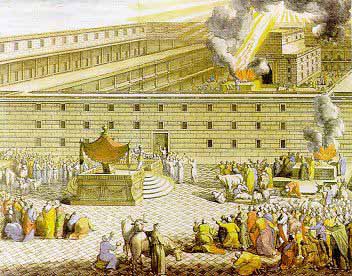
We see that an enterprising Evangelical church is to rebuild Solomon's Temple in Brazil (though shaved, in the Brazilian manner, of its gold - a notoriously poor structural material).  We wonder whether an exact replica could be novel over the original lost, lamented Temple, or the descriptions of the same in Scripture to which the church is presumably working? 
Lacking, as we do, the wisdom of Solomon, we are happy to see that according to Hogan Lovells' excellent newsletter, the Milan Court wrestled with somewhat the same question in Fortune S.r.l. v. Schneider Italia S.p.a (Court of Milan, Decision of 3 March 2010, N. 2843/2009), a case concerning rival watchmakers. I can't find either an online copy of the judgment or details of the Community Design concerned - can any of our readers assist? 
Quoting with thanks to the authors Maria Luce Piattelli and Alberto Bellan of Hogan Lovells, "The court clarified that "the informed user was not a person skilled in the art who has a deep knowledge of prior designs including very early patent rights filed and only marketed outside the European Community". Therefore the informed user did not necessarily have knowledge about "designs filed in very old times" which have not been used in the relevant market."
Which raises the question: can old prior art really vanish from the public mind after a while?  And if so, for novelty, individual character, or both?
In this case, the citations were apparently US patents from the early 20th century.  They would not, of course, have come to the attention of readers in the European Union for alas, dear readers, at the time there was no such beast.  However, they would have been deposited on public display a few days after publication in the reference libraries and Patent Offices of the UK, Germany, the Netherlands, and, we suppose, Italy, where they have remained available ever since.
There used to be explicit "time bar" rules for excluding prior art - for example, the UK had a 50-year time bar on citation of earlier patents (s50(1)(a) of the Patents Act 1949) and, I believe, the Benelux design law excluded designs more than a century old.  There isn't anything explicit in the current EU design laws, but the Commission commentaries on the draft laws did discuss excluding prior art which was only to be found in museums, or had otherwise disappeared from the market and the mind of the public.  But should exclusions of that type bite on patent publications which have always been available and which, thanks to the efforts of Google Patents and others, have now been resurrected on the Internet (somewhat in the manner of the Brazilian Temple)?  Our collective heart is with the design owners and the Milan Court, but our collective head is unpersuaded.  As to the principle, if the prior art is a knockout, why reward re-monopolising that which the public already had as of right? and as to the practicalities, where would the line be drawn - does prior art have to be as old as Methuselah to be excluded?  Oh for the wisdom of Solomon.